| Material Composition | High-Purity Alumina Ceramic (Al₂O₃ > 95%) |
| Electrode Profile | Square, Rectangular, Tubular, or Multi-Fin |
| Dielectric Strength | > 15 kV/mm |
| Operating Voltage Range | 10 kV to 25 kV |
| Operating Frequency Range | 15 kHz to 40 kHz |
| Cooling Mechanism | Forced Air Exhaust (Ozone Extraction) |
| Treatment Length | Custom built (typically 300 mm to 4000 mm) |
| Thermal Shock Resistance | Excellent up to 200°C |
| Mounting Style | Spring-loaded or fixed adjustable brackets |
| Compatible Substrates | Metallized Films, Aluminum Foil, BOPP, PET, LDPE, Paper, Woven Sacks |
| Key Features | Arc prevention, ozone resistant, uniform dyne level distribution |
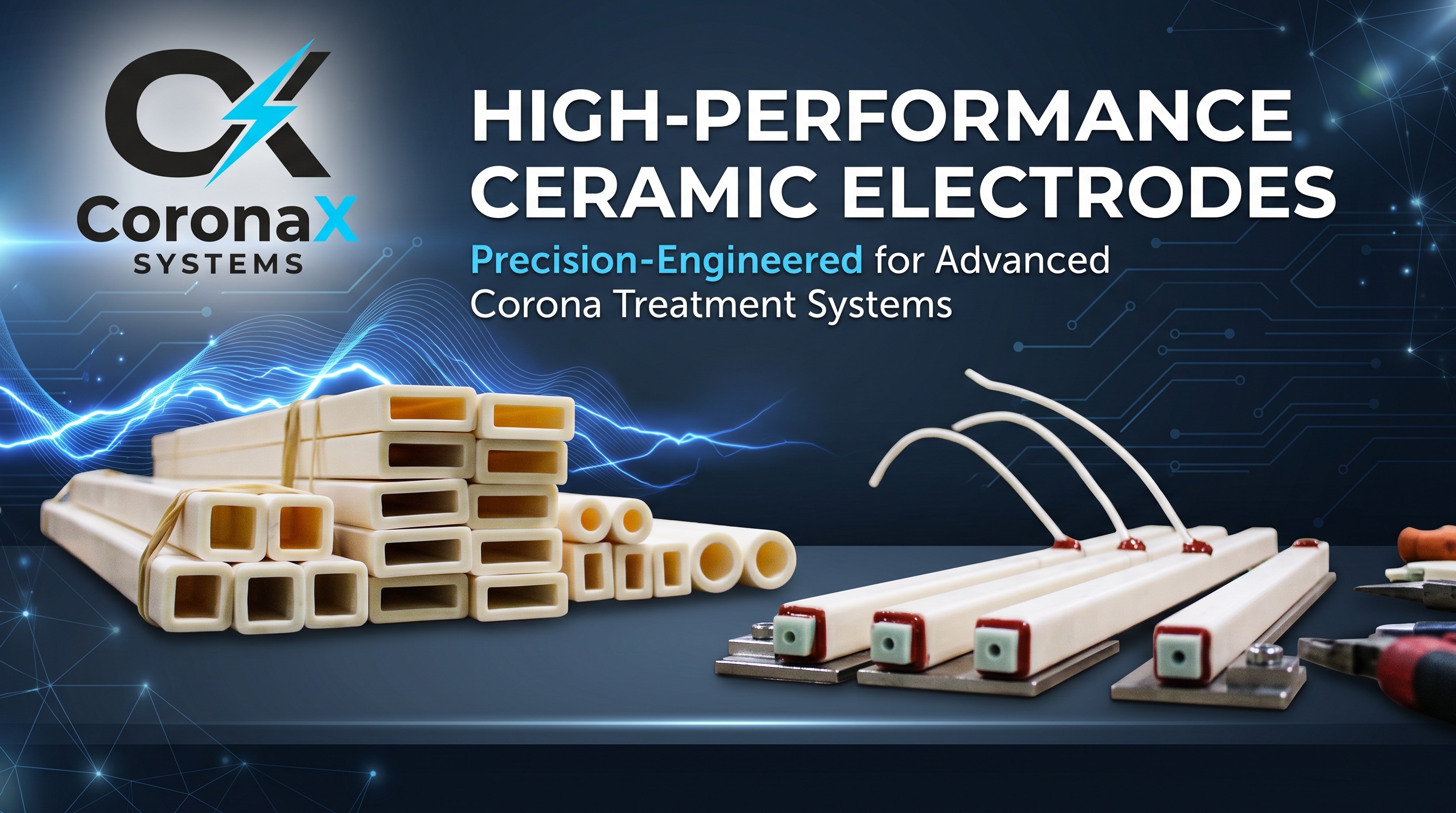
Alumina Ceramic Electrodes
Ceramic electrodes are high-performance discharge components engineered specifically for Corona Treatment systems. Manufactured from high-density, high-purity alumina, these electrodes generate a highly uniform and intense corona discharge across the substrate web. Because the ceramic acts as a dielectric barrier, these electrodes are essential for treating conductive materials—such as metallized films and aluminum foils—without arcing or causing short circuits. They provide exceptional thermal stability, outstanding resistance to ozone degradation, and a prolonged operational lifespan even under continuous high-voltage and high-frequency loads.